- Training
Why training cycles matter (and why random training creates random results)
January 26, 2026
3 min read

Table of contents
Most people train based on “splits” or “what feels good today,”
but very few train through structured cycles.
That’s the main reason why:
progress happens only in the first months
then a plateau hits
then people start switching exercises
then switching programs
then switching gyms
then switching motivation
But the result stays the same. The problem isn’t effort — it’s the absence of periodization and stimulus structure.
What cycles actually do
The body doesn’t adapt on the level of a single workout.
It adapts on the level of a block of consistent stimulus.
A training cycle applies:
a specific stimulus
in a specific dosage
to specific muscle groups
for a specific purpose
with measurable progression
Cycles give the body what it needs to do best — adapt.
Random training = random results
When stimulus changes randomly, the body has no reason to adapt to anything.
→ adapt to what?
→ improve for what?
→ progress in which direction?
Random stimulus = random adaptation, which means no meaningful adaptation.
That’s why the idea
“I constantly change exercises so my muscles don’t get used to it” is a myth.
Muscles don’t grow because things are “new.”
They grow because things are repeated with progression.
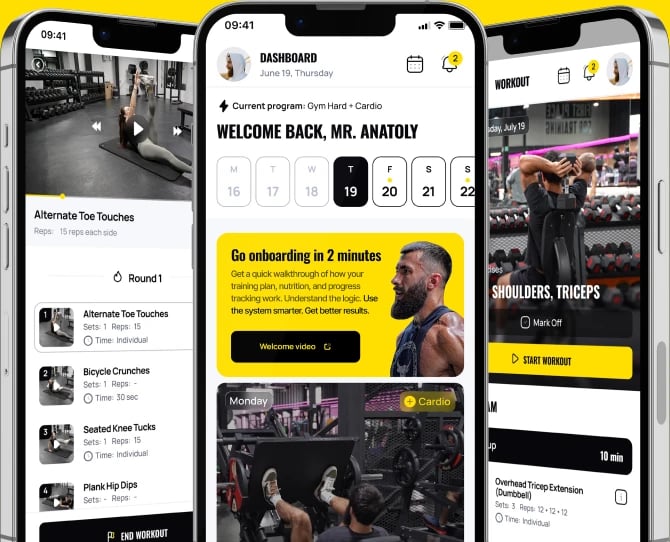
APS uses block-based logic
APS uses three core cycle types:
Accumulation — building volume
Intensification — increasing load
Deload — strategic reduction for recovery and consolidation
This structure matters because:
Volume teaches the body to tolerate work
Intensification teaches it to produce force under that volume
Deload allows the adaptation to lock in
Then the next cycle starts from a higher baseline
Without cycles, most lifters hit a ceiling within 6–12 months.
And that’s exactly what happens to the majority of “consistent” gym goers.
Why people get stuck
Most train in the exact same zone indefinitely:
Same weights
Same sets
Same reps
Same exercises
Same effort
Same fatigue level
The body loves that — it’s efficient.
But efficiency = no adaptation.
The accessory question: variability vs chaos
In APS we’re not against variety.
You can change accessory exercises every single workout if you want.
But there’s one rule: the base lifts must stay consistent
Because base lifts are what:
accumulate adaptation
progress week to week
build force production
develop neuromuscular efficiency
reinforce technique
anchor the cycle
Accessories, on the othr hand, are for:
weak points
local strength
range
stability
volume
joint health
detail work
They support the cycle — they don’t replace it.
The most common mistake
Most gym lifters do the opposite:
→ change the main lifts every few weeks
→ but keep accessories the same
So they constantly restart adaptation — and then wonder why there’s no progress.
Correct structure: base consistent, accessories variable
That gives the best combination:
progression
structure
adaptation
and variety
Cycles and performance
Every actual performance sport uses cycles:
weightlifting
powerlifting
track
swimming
combat sports
The only area that doesn’t is mainstream fitness — and that’s the only area where people train for years without changing.
Cycles aren’t for professionals — they’re for anyone whose body needs to change.
Without cycles, training is just training.
With cycles, training becomes a system of adaptation.

Read this next
Read More
Your system is ready
Get Exclusive Training Tips From Anatoly
Weekly insights, workouts, nutrition tips, and early access to new APS features.
Subscribe for Updates
By signing up for our newsletter, you agree to the terms outlined in our privacy policy. You can unsubscribe at any time.